
A new patio is a positive investment in your wellbeing, your lifestyle and your property value. And so it’s only natural that you’ll want make sure it keeps its good looks for many many years. Maintaining your new patio needn’t be hard work, but it is important if you want to protect your investment. Here are our tips.
It’s important to take your landscapers’ advice seriously on this as stepping onto newly laid pavers before the mortar has set properly could upset the levels. Which, in turn, may lead to an uneven surface and problems with drainage. General advice is to keep off your patio for 48 hours after completion.
Plants are a great addition to any patio and they really make the place feel like home. However, it’s best to wait for at least a week before introducing heavy items such as furniture and containers of plants.
As time goes by, you may find it tricky to clean around garden ornaments and plant pots on your patio. Why not consider built-in planters as part of your garden design? This is a great way to create cohesion between the patio and the rest of your garden. And for patios that sit 300mm or more higher than the level of your garden, a built in raised bed can help you to comply with building regs.
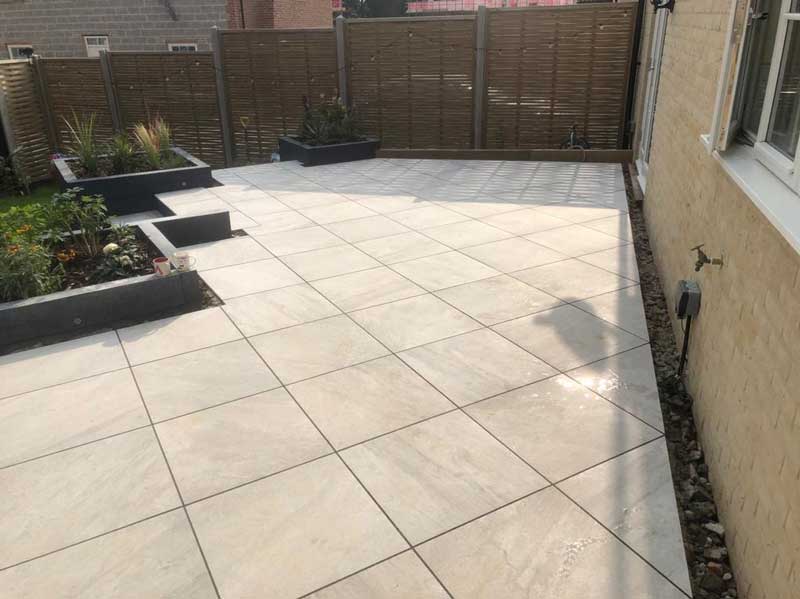
Built in raised beds make for a cohesive garden design and help blend a new patio into the wider garden
New natural stone patios sometimes develop white marks. This is only temporary and it’s caused by minerals and salts being dissolved by water, and making their way to the surface of the pavers, where the water evaporates leaving a chalky looking deposit. It’s perfectly natural and it will settle down over time.
More often than not, scrubbing with a stiff broom and then rinsing with water will remove the deposits, but if you are at all worried, contact the landscaper who installed your patio for advice.
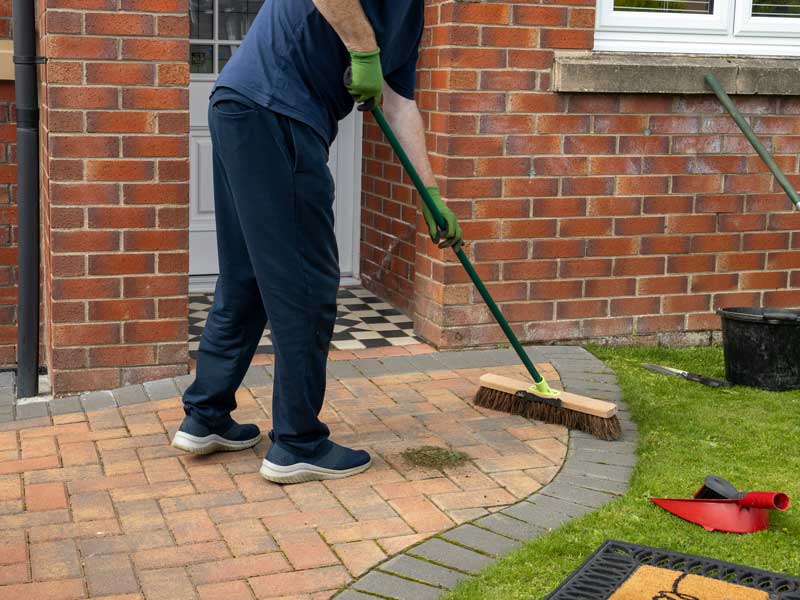
Patios are definitely low maintenance compared to flower beds or lawns, but that doesn’t mean they are no maintenance. They will need cleaning from time to time, depending of course on how they are used.
Sweeping away dust and debris on a regular basis is an important part of patio care. Not only will it help prevent dirt from the garden being tramped into the house, regular sweeping will keep your new patio looking fresh.
From time to time, you may feel your patio needs a bit of a wash. Please DO NOT use a pressure washer on pavers or grout. The powerful blast can damage the surface and dislodge the grout. Instead, dissolve a squirt of eco-friendly washing up liquid in a bucket of warm water and use this mix to scrub the area. I find that a stiff-bristled broom is the best tool for this job. Rinse it off with clean water and your patio will come up a treat.
NEVER use bleach, vinegar or strong household chemicals on your new patio. They could potentially spoil the surface and could do immense damage to the environment. If you are coping with heavy soiling, invest in a proprietary cleaning solution that is tailored to your stone type.
Enjoying your new patio will probably involve food, drinks and condiments that could potentially stain the surface if spilled. Please don’t let the fear of random marks, spoil your enjoyment. Mop spills up as soon as you possibly can, sloosh with diluted washing up liquid, then rinse with clean water.
If marks are still visible when the water has dried, there are a wide variety of specialist patio cleaning materials on the market. Seek advice on which one to use as different types of stone will react differently to different cleaning agents.
Summer: Sweep regularly, trying not to push dust and debris into the drainage channels. Wash with mild detergent once a month to keep your patio looking fresh and inviting.
Autumn: Remove fallen leaves at least once a week. Do not let them accumulate in the corners or behind plant pots as they will stain the stone when they start to rot.
Check that all drainage outlets are clear and that water can easily run off the patio.
Put furniture and rugs into storage to allow the air to get to the stone. Good airflow and free drainage will discourage nasties such as moss and algae.
Give your patio a thorough scrub.
Winter: Keep sweeping on a regular basis if needed. This is particularly important if your patio is regularly crossed by muddy boots and/or dirty paws.
If we should have a fall of snow, DO NOT use road salt to clear it. Road salt and similar products can irreparably damage the surface of your patio. Gravel or play sand (the type that doesn’t stain!) will make the surface feel a little safer to walk on. If your patio has been installed to a high standard you should have no problems with standing water freezing into slipperiness.
Spring: Wake your patio up with a good spring clean. Tidy away any bits and pieces that have accumulated over winter (don’t worry, we all do it!), then choose a dry day to give the whole area a good sweep. Check those drainage outlets and make sure water can run freely off the patio. Take a good look at the grouting too - make sure it’s intact. If there are any gaps - repair them ASAP. The last thing you need is water seeping underneath your paving stones.
Your next spring job is to scrub your patio with soapy water to remove any embedded dirt and algae. Freshen it all up by rinsing with clean water before bringing your garden furniture out of storage. Finally, enjoy a cup of coffee on the patio - even if you have to keep your coat on!
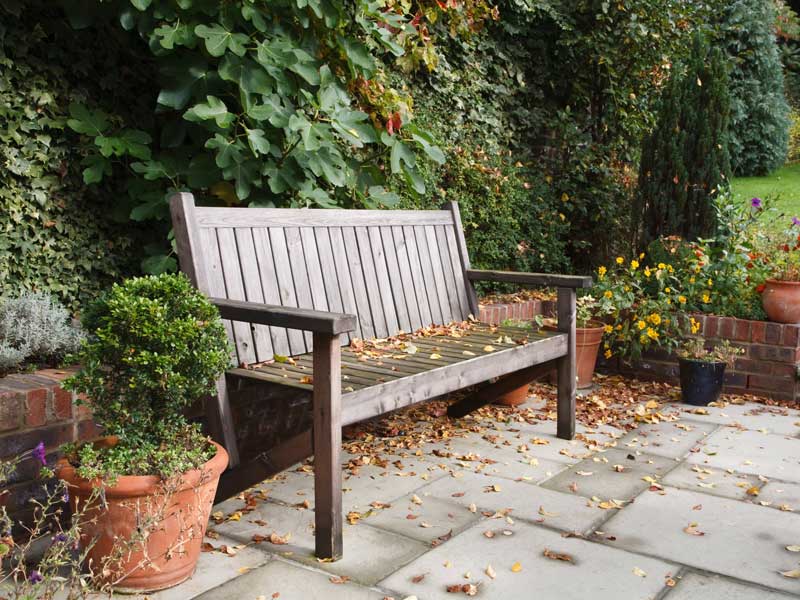
Be sure to sweep your patio regularly in autumn as tannins leaching from fallen leaves can stain the stone
Paving expert Gareth Wilson is a big advocate of using penetrating sealers on natural stone. He says that they make cleaning easier, reduce the risk of staining, discourage algal growth and help enhance the colour of the stone. However, he does warn that it’s important to either build your patio using pre-sealed pavers OR wait at least 90 days after installation before applying a sealer.
Timing is everything..it’s crucial that all moisture has gone out of the patio bed and the pavers before sealant is applied. If not, then you’ll be sealing in moisture and potentially creating future problems.
Visit the paving.site website to read more about applying sealers after laying a patio.
You might enjoy this article about choosing the best materials for your new patio
Need advice? Here's how to contact us